






![Silkland 10K 8K HDMI 2.1 Cable Certified, [4K@240Hz 144Hz 120Hz, 8K@60Hz] Ultra High Speed HDMI Cable 48Gbps (Upgrade Braided](https://images-na.ssl-images-amazon.com/images/I/71VZdEiDrFL._AC_UL165_SR165,165_.jpg)













The media could not be loaded.
Here is a TLDR of some points I think are useful about the capture card to save you some research if you haven't done any already:
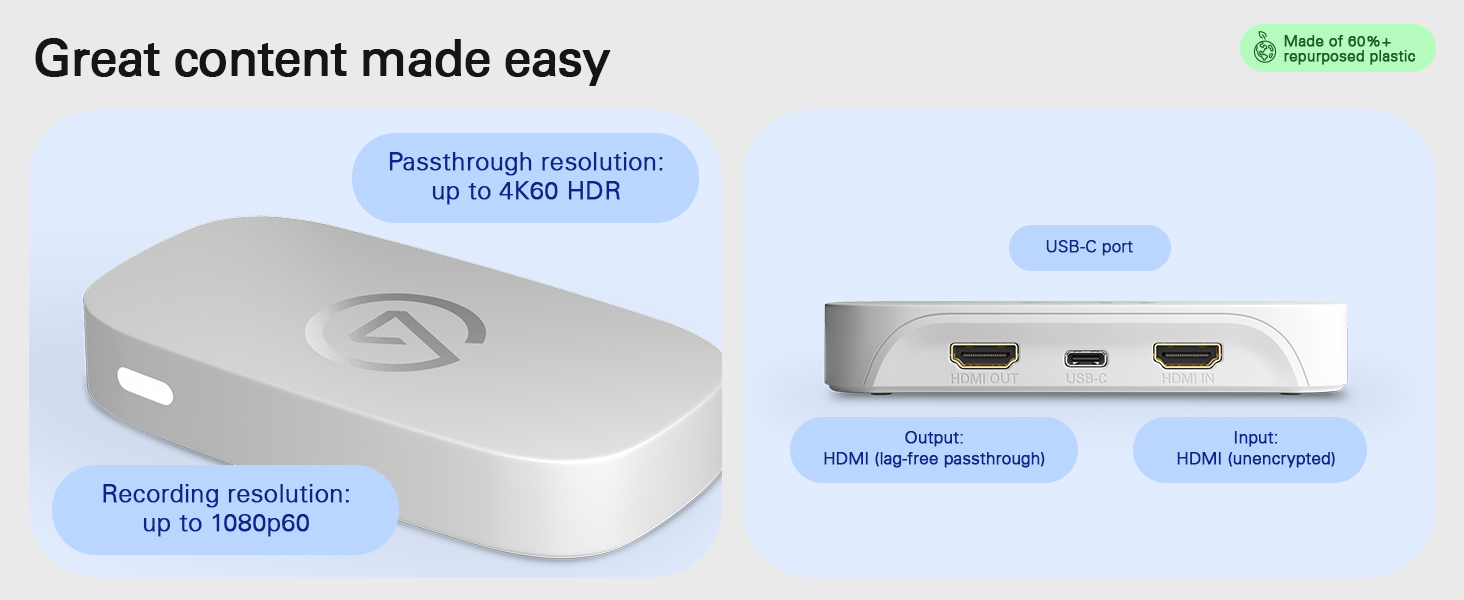
- It captures in 1080p, 60 FPS; industry standard for capturing gaming content. If you are looking to capture anything higher than that, this is not the card for you.
- It can pass through up to 120 FPS at 1080p, while it is limited to 60 FPS passthrough for 1440p, 4k and HDR at any of those resolutions. It can do 720p up to 120fps too, but if you're the kind of person in the market for a capture card you should be avoiding 720p anything ever.
- It is plug and play compatible with PlayStation, Xbox, PC, Mac, and IOS devices (You will need a capture software such as OBS on your capture computer)
- It does not come with HDMI cables. You need (2) high quality HDMI cables capable of doing the resolution and framerate you plan to pass through/capture at. Do your research and be sure to buy cables that support 120 FPS if you plan on passing through that framerate or you will be disappointed.
- It comes with a USB type C to type A cable that is USB 3.0 for to send the capture video to your capture computer. You can use an equivalent or better cable and it will work the same. It will not work with a cheap phone charging cable.
- Elgato does not recommend using a dongle for input to your capture computer, it is not guaranteed to work. (for the record, I use a high quality USB 3.0 dongle as I capture my gaming PC to a Macbook Air M2 and it works fine. It was the second dongle I tried though and most just aren't going to work.)
- Setup *can* be tricky depending on your setup if you aren't the most tech savvy, but there are tons of people on the internet to help troubleshoot, and Elgato has great online and phone support. Console to PC setups should be the easiest to setup.
- Download Elgato Capture Device Utility on your capture computer and update the firmware or play with the Input EDID modes if your having image issues. "Display" was the mode that worked for me and my configuration.
- Ensure the device your capturing is not forcing more than 120 fps into the card or you will have issues. You can change this in your console or PC's system settings.
- Audio comes through HDMI. If you have a different audio setup such as Wavelink or other Mixamps/XLR setups, you will have to research how to setup your audio. I use wavelink and it was very straightforward with a Youtube tutorial.
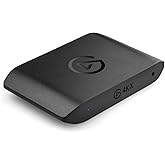
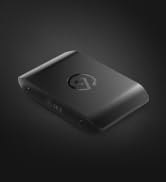
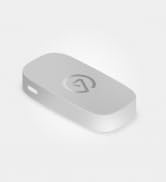
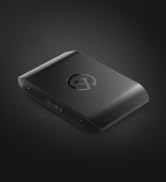
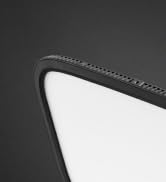
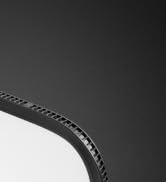
The card itself is is about the size of a rectangle donut, it fits in your hand and was smaller than I expected. It is made of matte plastic and has rubber feet. It literally has not moved or shifted from where I first placed it on my desk which is nice. Elgato comes from the same company as Corsair, so you can expect good build quality from them.
I use this capture card for 1080/60 capture with 1080/120 Passthrough and it functioned perfectly once I fixed my display settings in Windows. (I have a 165hz monitor and had to change it to 120 for it to work)
All in all, this is the new industry standard entry level capture card for streamers, content creators and other people who want to capture footage from one computer to another, and it gets along well with streaming software such as OBS and I recommend it to anyone whos here looking for their first capture card. You wont be disappointed. there is no reason to spend more money on an HD60 X and if you absolutely need higher resolution and framerate capture (you probably don't), you should make the jump to the 4K X.
And for goodness sake, do not cheap out on HDMI cables. Trust me. Buy good HDMI cables.
10/10 Recommend.


